Material, Process, People: What Happens When We Work Together Differently?
Written by June Swindell, project in collaboration with the Future Fibres Network+ (FFN+) which aims to bring environmental science into the heart of the UK fashion, apparel and textile sectors.
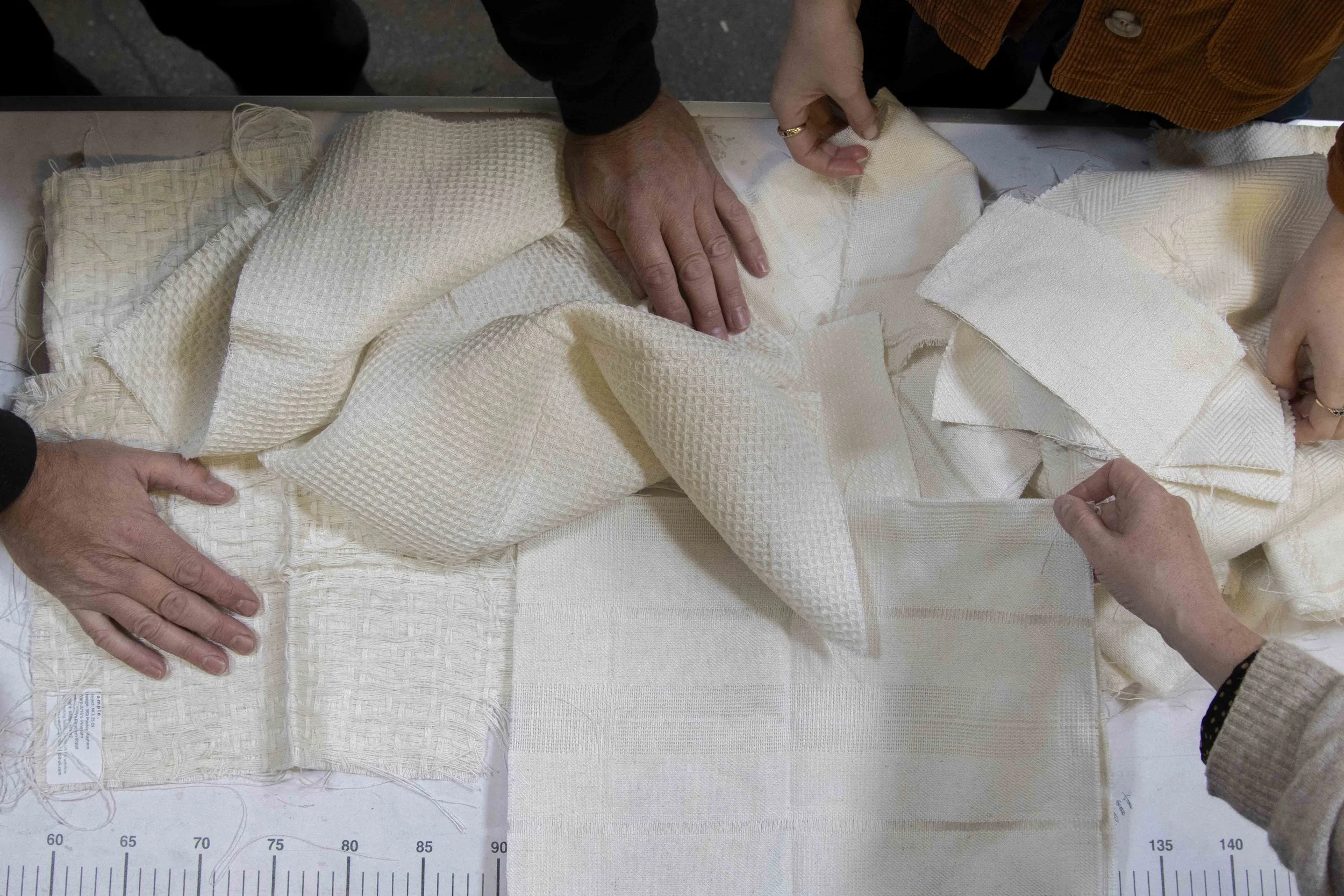
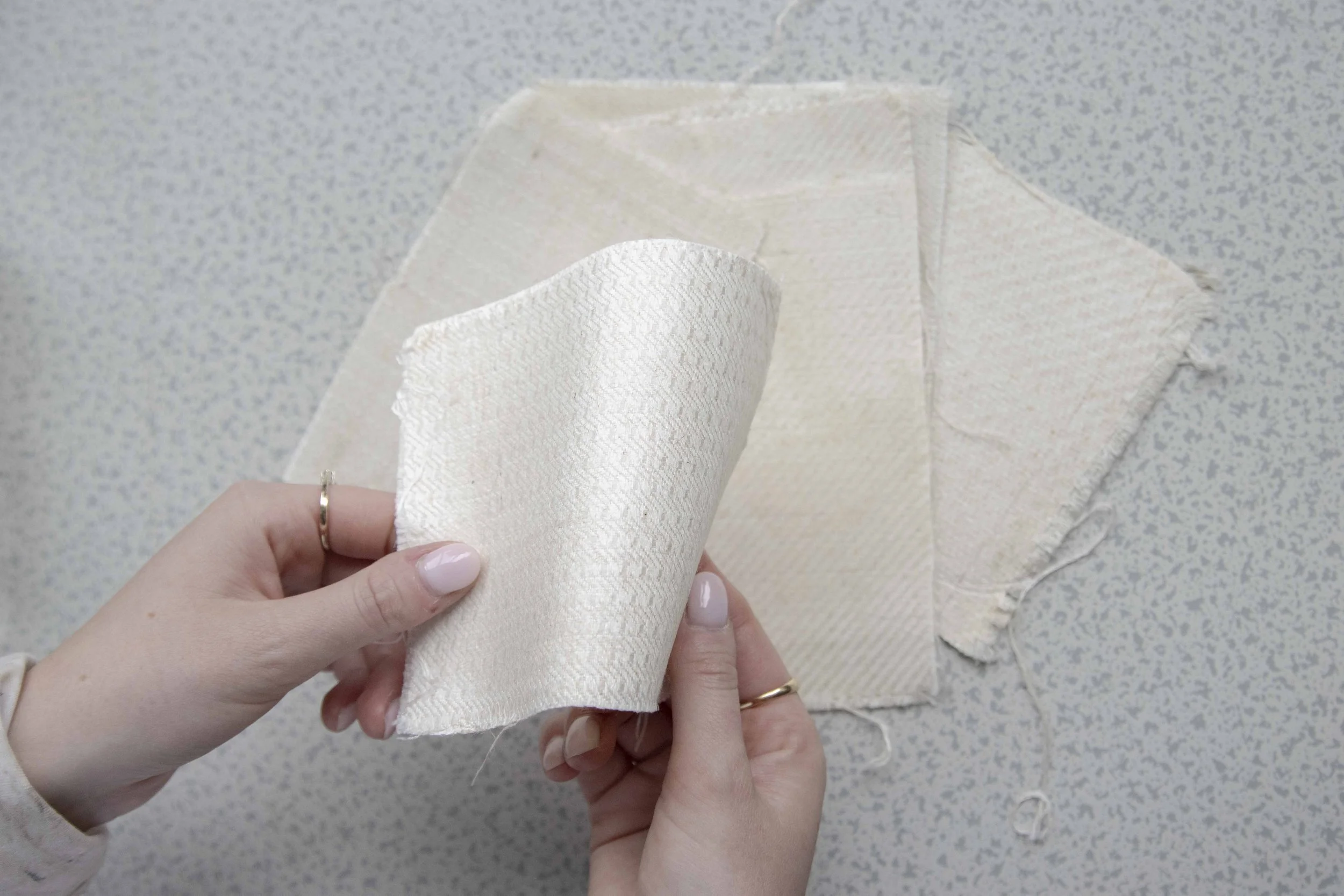
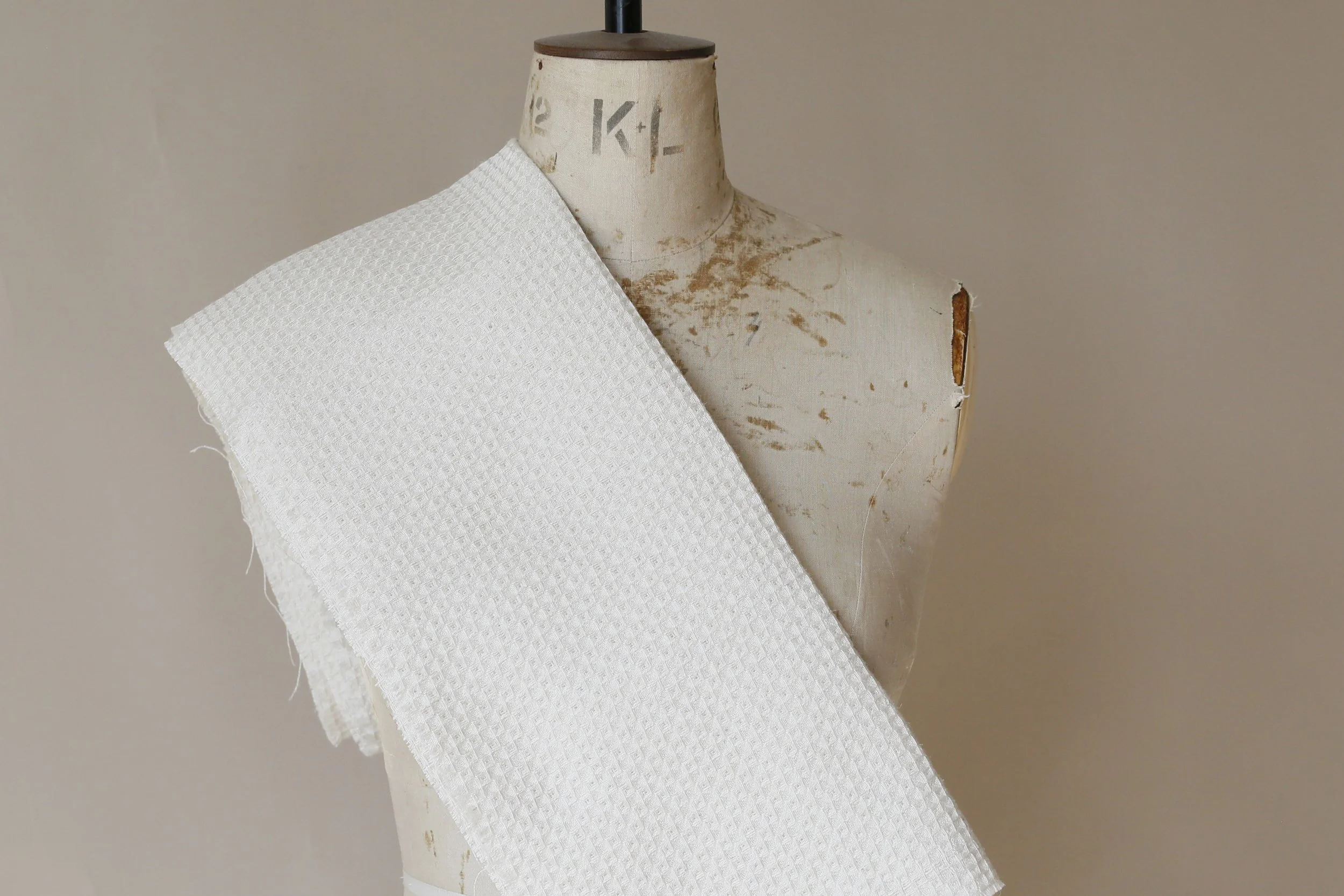
Samples of woven structures in the beautiful pineapple yarn
The All Cellulose Composite Project proves that science, design, and manufacturing are no longer separate stages in textile development. They may speak different languages and have different priorities, but what really happens when they align? They become part of the same process.
Better outcomes are achieved when these disciplines work together from the start and stay connected throughout. We get usable products, and this was certainly our experience.
All Cellulose Composite
The All Cellulose Composite project explores how cellulose-based materials can be reshaped into new forms through controlled processes, including ionic liquid systems.
Circular Textiles Portal – All Cellulose Composite Project
The material development explored here shows how science, manufacturing, and design need to work in unison, not one after the other. Each brings different priorities, the value comes from holding those differences together.
The result is not just new materials, but more usable and scalable approaches to sustainable textiles along with new ways of building circular business models, which we are still working on.
This also opens questions around how materials sit within wider environmental systems. Instead of being simply products they are treated as part of longer material lifecycles connected to agriculture, use, recovery and reuse.
This work was also part of a wider set of projects exploring how fibre materials can be developed collaboratively. The Future Fibres Network+ worked alongside their fellow sub-networks; IMPACT+ and Back to Baselines in Circular Fashion and Textiles, all of which are part of the UKRI Circular Fashion and Textile Network Plus: a collaboration that seeks to understand and drive the fashion and textile industry towards sustainable and responsible practices.
Our Project Team
June Swindell, salt. alongside Richard Evans, Ogam Jacquard Weavers
Helen Paine & Kate Goldsworthy, University of the Arts London
Dr Raquel Prado (formerly of Ananas Anam)
Sophie Fields & Mike Ries, University of Leeds
A material that sits between systems
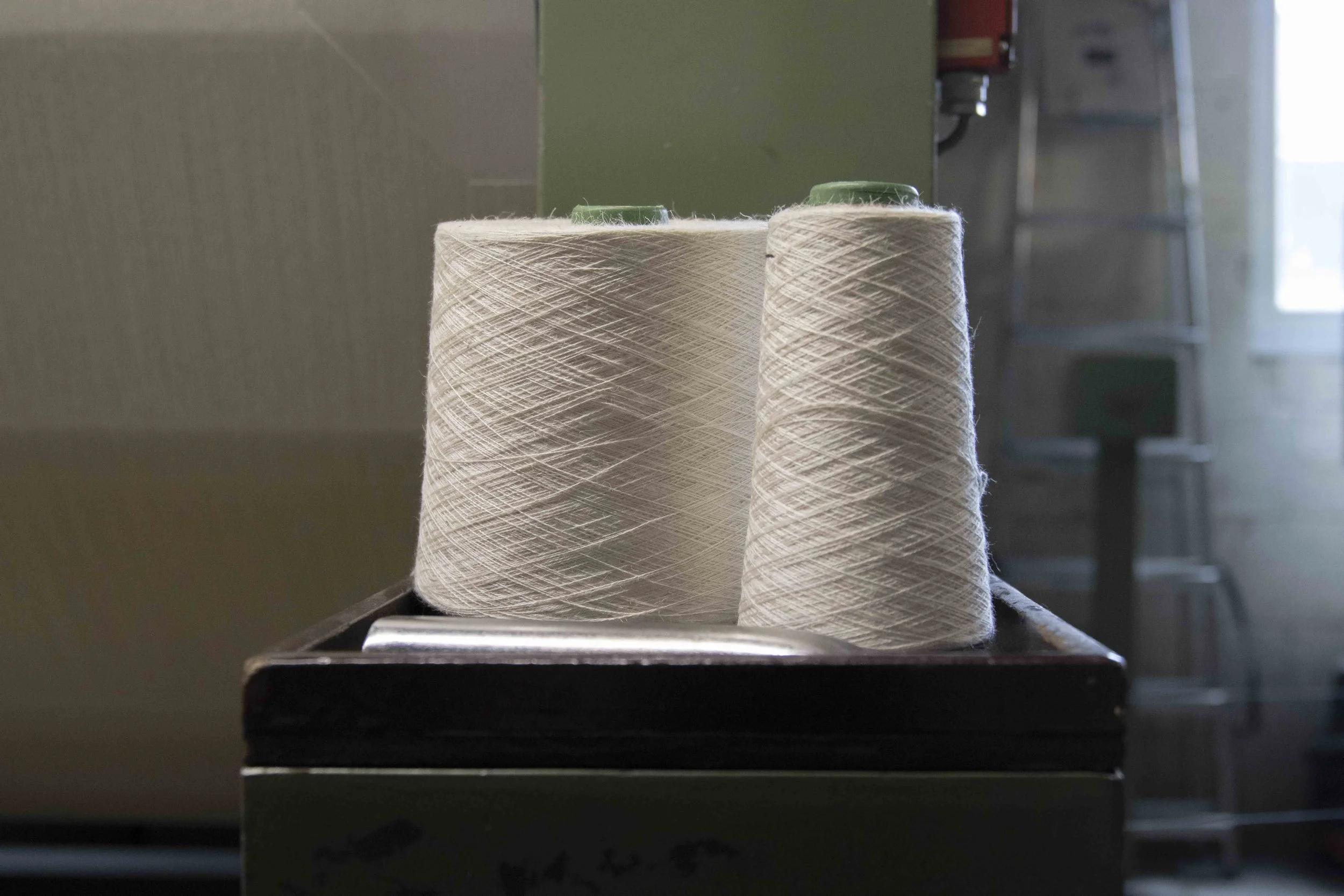
We began with the yarn, choosing a fibre made from pineapple leaf waste that already sits between agriculture, material engineering and textiles systems.
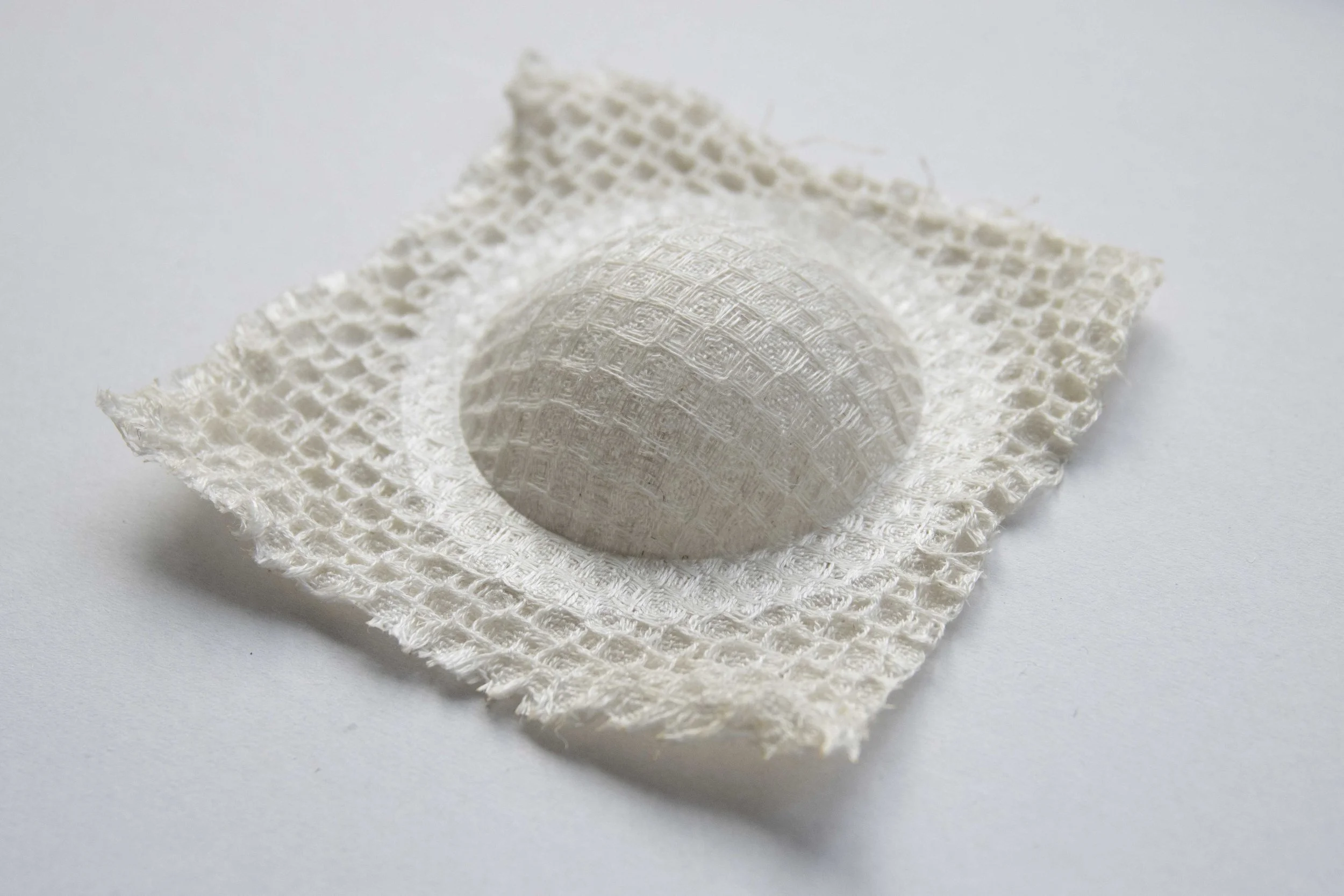
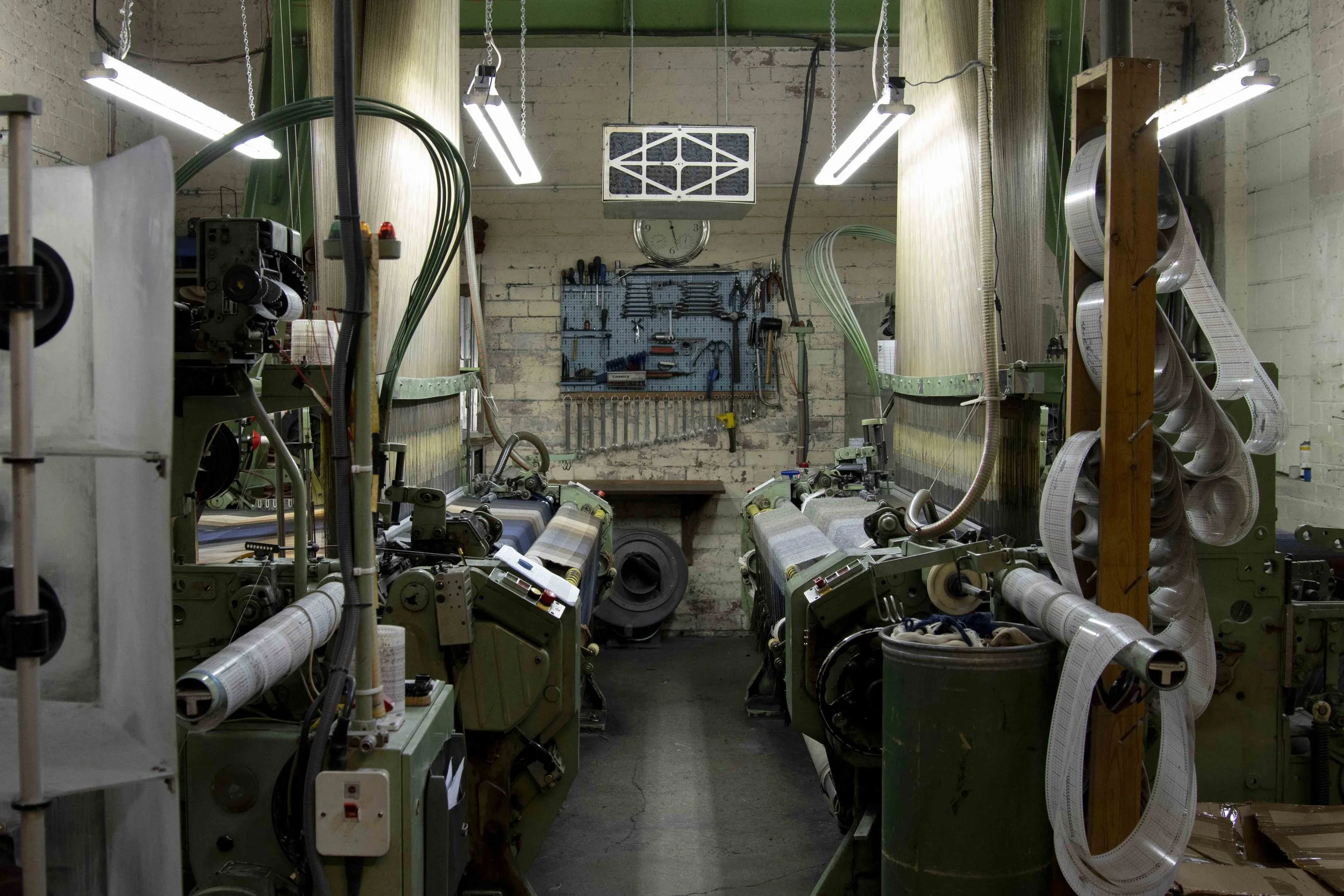
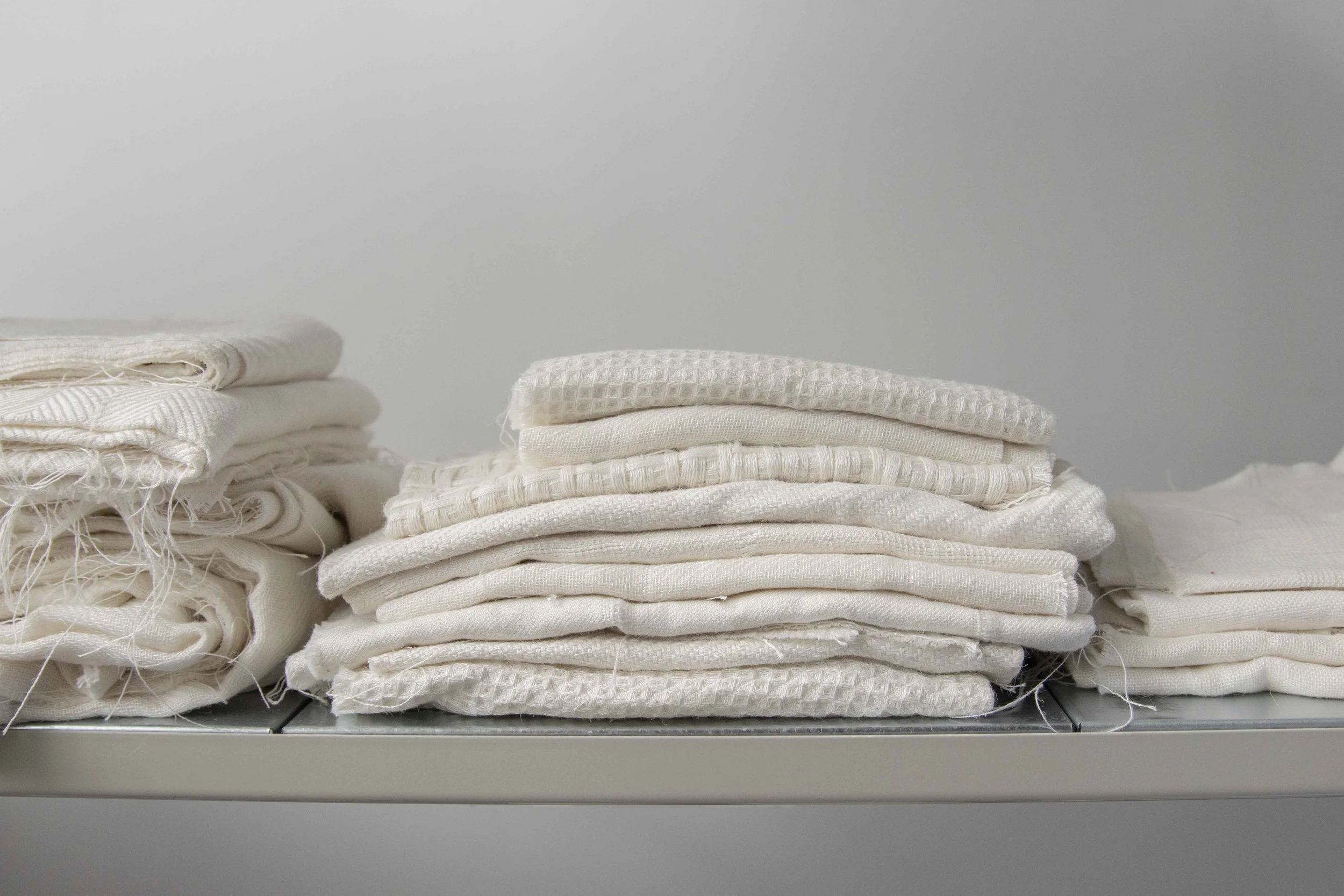
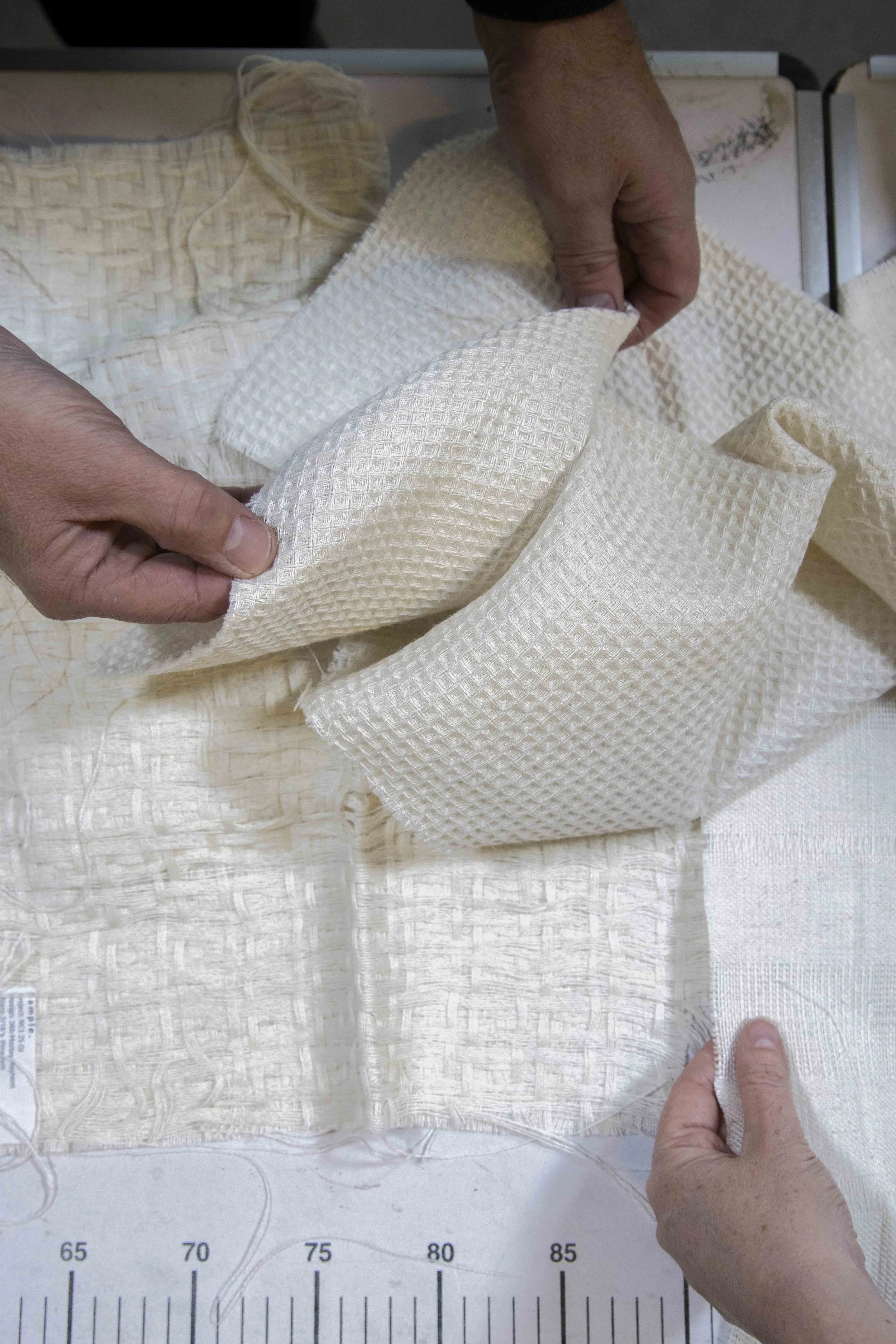
Across three production phases at Ogam Jacquard Weavers, the yarn was tested through different weave structures ranging from lightweight cloth to dense, three-dimensional forms.
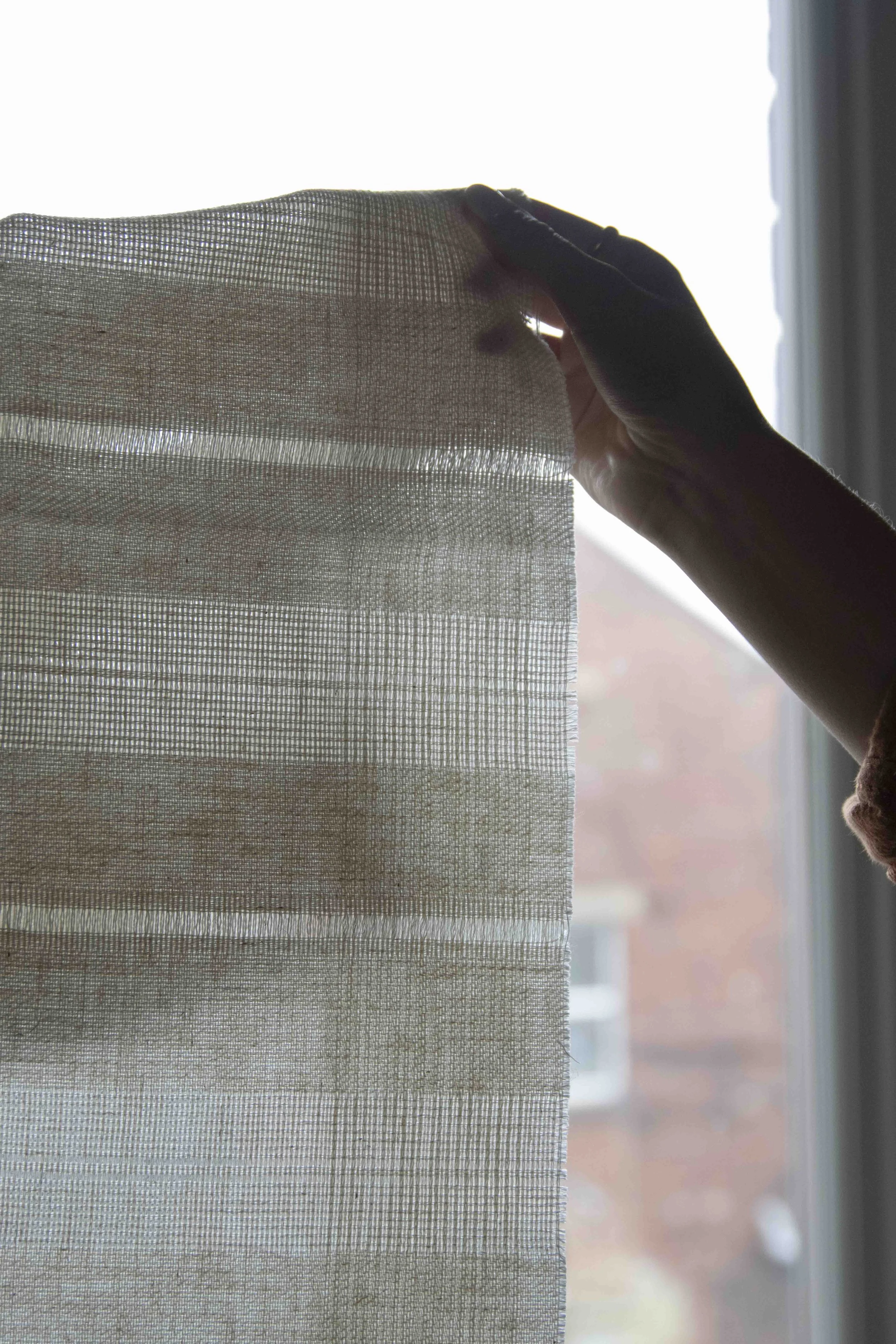
Double cloths, honeycomb structures and open weaves were developed in response to how the yarn behaved on the loom.
At the same time, academic partners studied performance and behaviour whilst design input focused on how these changes could translate into use. The material was not owned by one discipline, it was shared.
The fibre itself already carries a relationship to reuse. Pineapple yarn begins as agricultural waste and moves through another cycle of value, where what is normally discarded becomes part of a new material system.
Fibre …….. into yarn
When material becomes structural
The Ionic liquid treatment moved the woven material into a different state. Used in controlled ways, this allowed the textile to shift between soft and rigid.
This is not a surface finish, it changes how the fibre system works at a structural level.
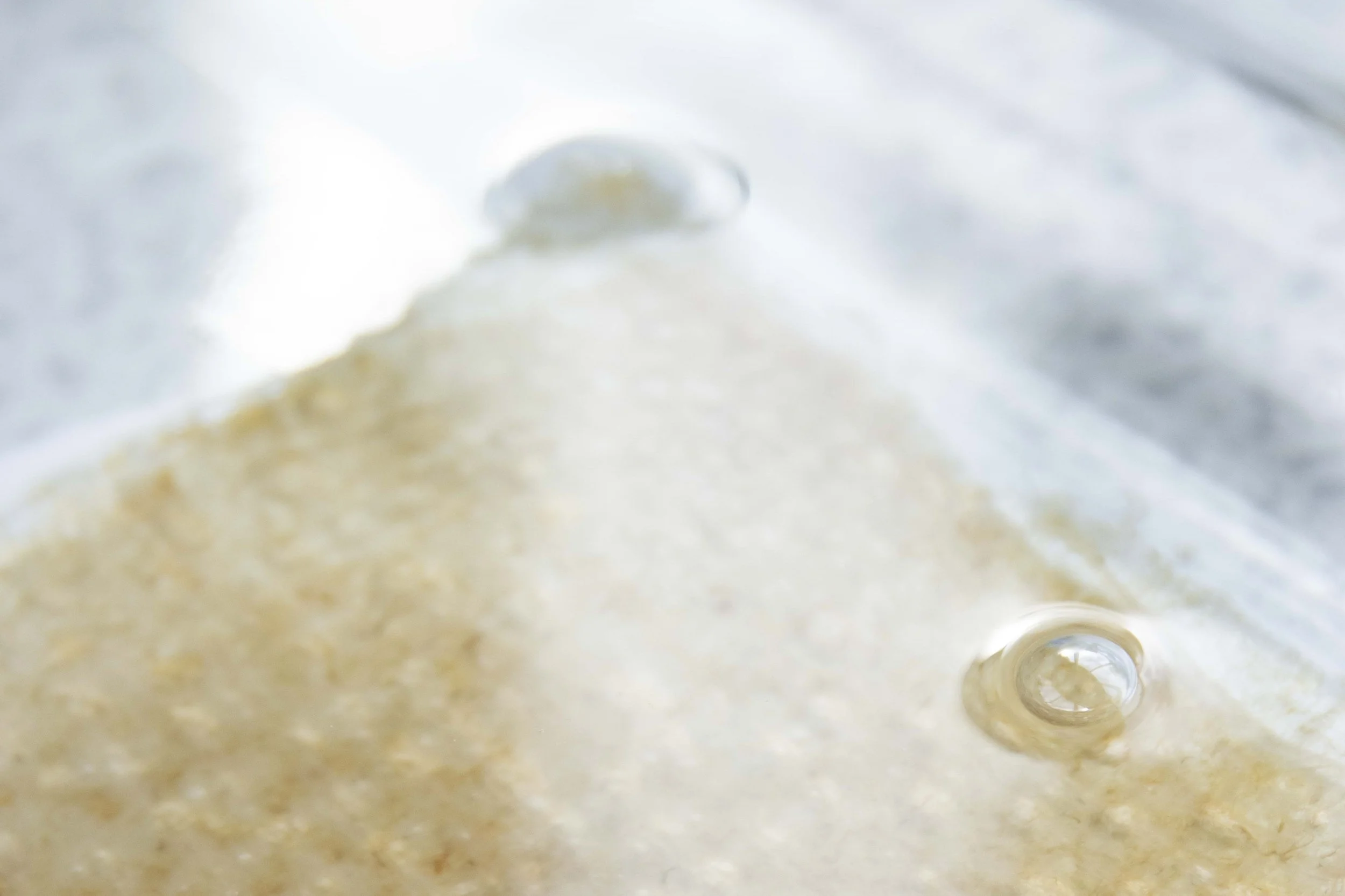
This approach connects to wider research into all-cellulose composites, where cellulose is partially dissolved and reformed into new material systems.
At this point, the textile stops behaving only as a fabric, it starts to act as structure when heated.
A honeycomb weave can hold load.
A double cloth can become a panel.
A textile can move between softness and stability.
The possibility of achieving this within a cellulose system also matters environmentally as materials that remain closer in composition may offer different possibilities for circularity, repair and recovery over time.
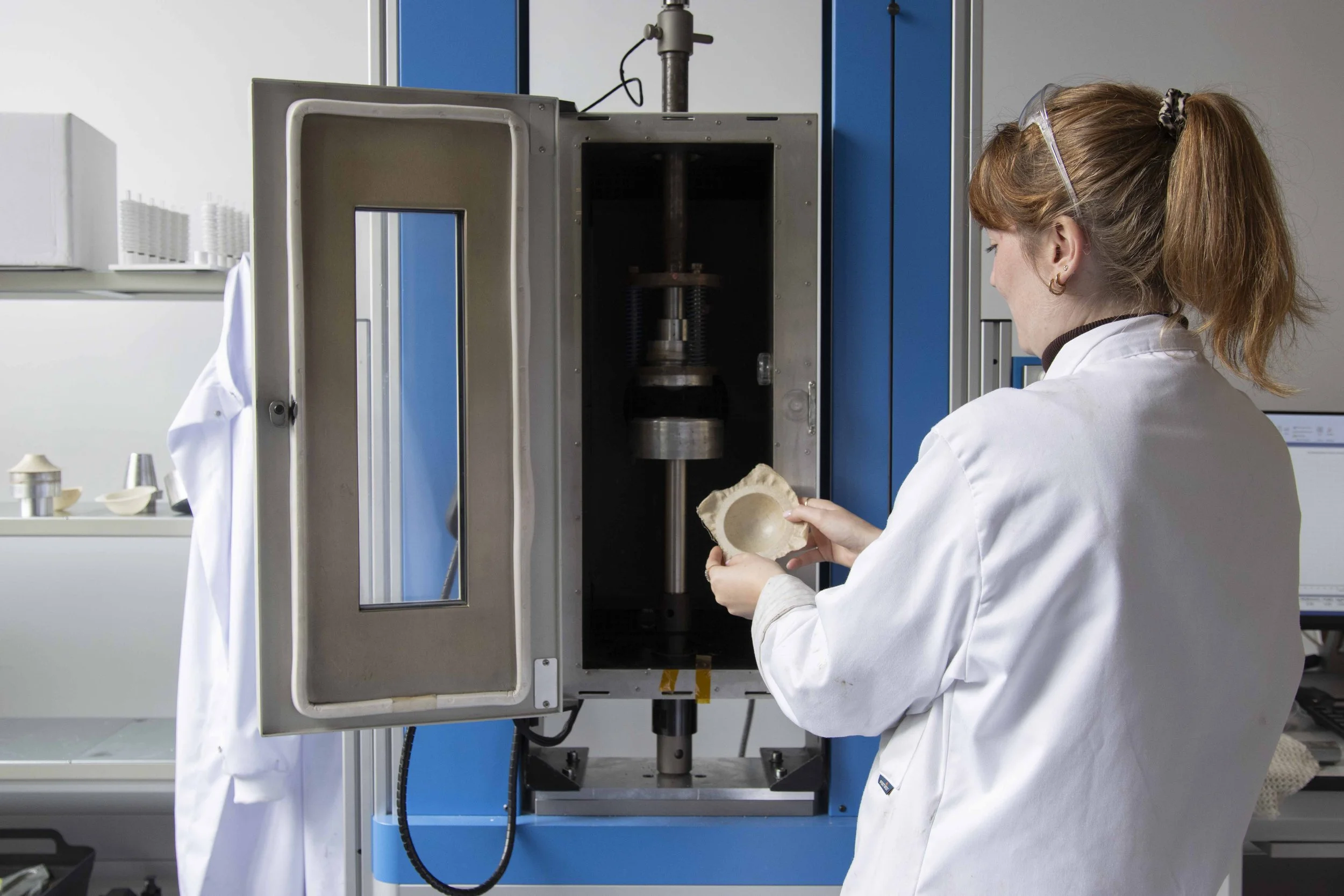
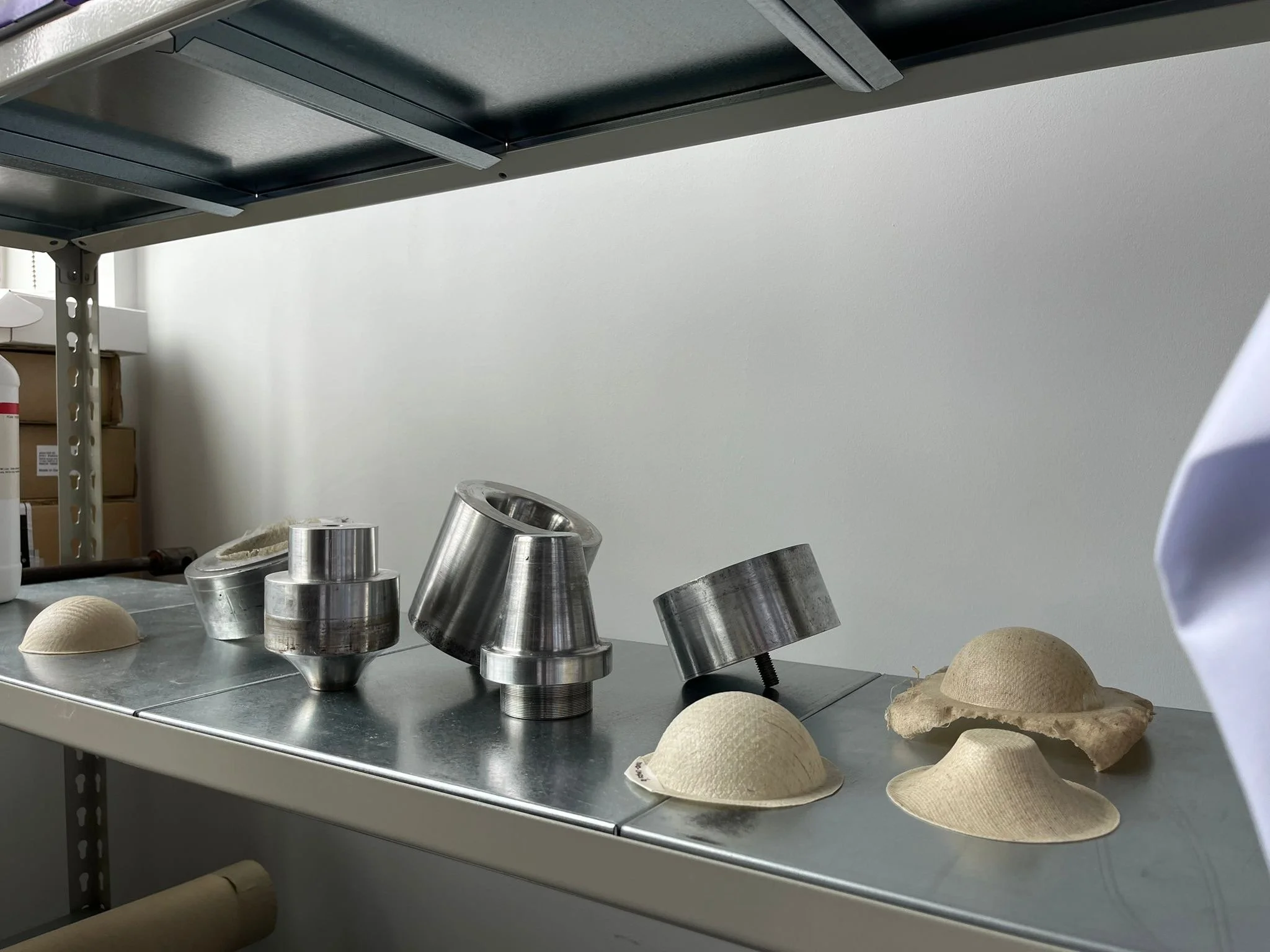
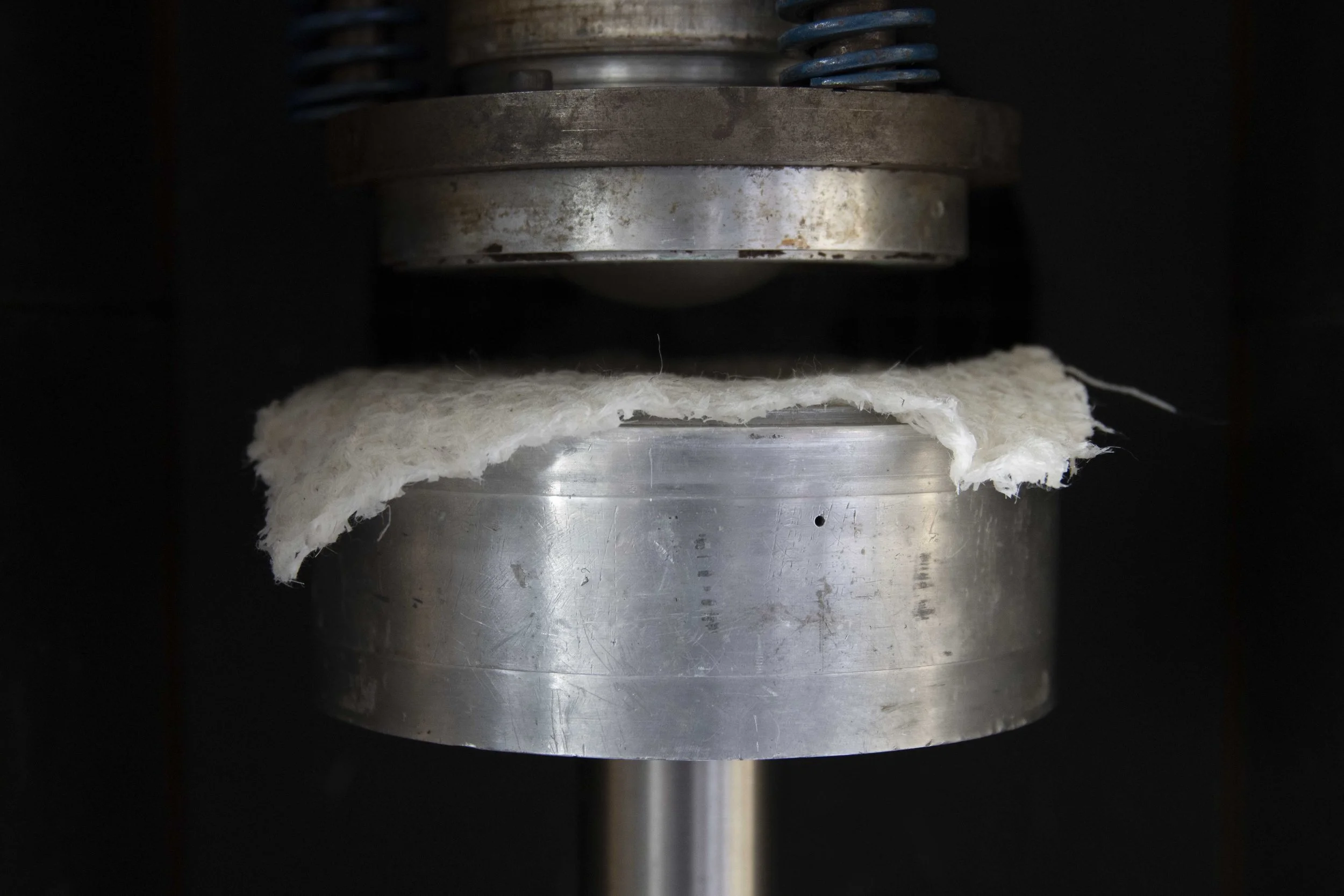
Ionic liquid treated textiles can bear weight ….. rigid and semi-rigid state
Sophie removes the treated woven sample from the press
Manufacturing as an active research space
Manufacturing was not treated as a final step, it became part of the development process.
With Richard at Ogam, decisions were made in response to what was happening on the loom. Density, weave type and construction were adjusted as the material was tested during the laboratory stage, which created a loop rather than a sequence.
Material behaviour ↔ Manufacturing response ↔ Design interpretation ↔ Scientific understanding
This is where the work became truly collaborative.
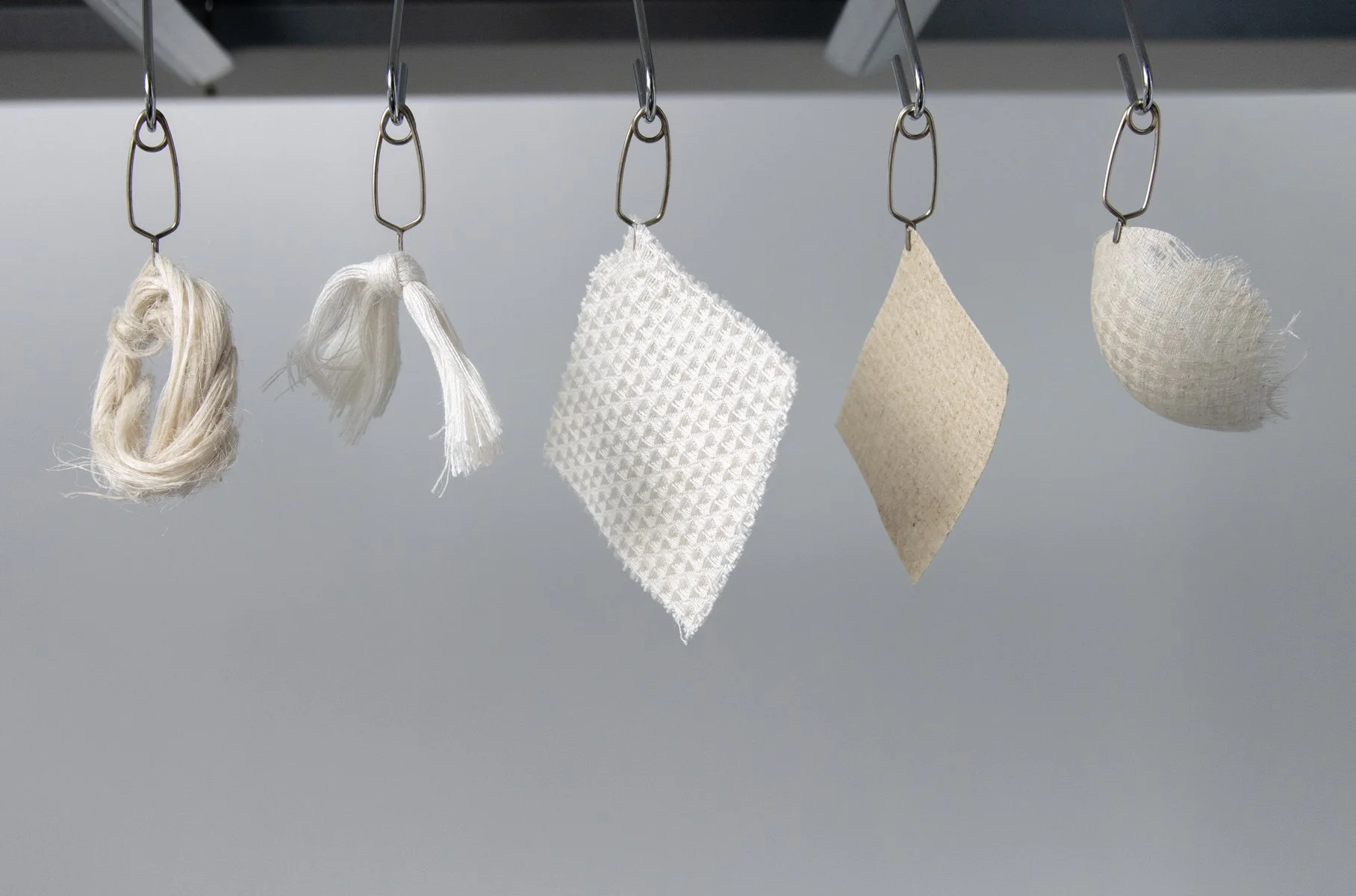
From plant to product and back
Design as translation between systems
At University of the Arts London and within salt., design acted as a bridge between disciplines, not just styling, or a final output, but a translation of what it could become.
Some key questions guided the work:
What does rigidity mean when it is woven as a soft fabric first?
Where does a textile become structure?
How does softness behave when it starts to hold form?
Can different structures create other shapes more successfully?
There is also a quieter sensory dimension within the work. Materials derived from plant fibres carry irregularities, tactility and light interaction that differ from highly processed synthetic surfaces. These qualities connect closely with biophilic design principles, where natural materials and textures are understood to support wellbeing, comfort and human connection to living systems.
In architectural and interior contexts, these material behaviours may offer more than technical performance alone. they can influence atmosphere, acoustics, warmth, and the emotional experience of a space.
Design keeps these questions open for longer, allowing the material to develop without being fixed too early.
Can different structures create other shapes more successfully?
Collaboration as system design
This project is not only about the material, it’s also about how the work is structured. When science, manufacturing and design work together, development becomes more responsive and grounded in real and final use.
The value comes from overlap, not separation.
Applications still in formation
The material is still developing but early applications point towards interior and architectural use:
door inserts
curved wall panels
roller blind systems
acoustic systems
lightweight furniture components
outdoor furniture
automotive and aeronautical components
packaging
These could be finished products, but for now they are ways of testing how far the material can go. They are just the start.
Potential applications in interiors and architecture are particularly relevant within current sustainability discussions. Lightweight cellulose-based structures may contribute to lower-impact interior systems while offering renewable alternatives to petroleum-derived laminates, foams and composite panels.
Their tactile and natural qualities also align with growing interest in healthier interior environments that prioritise material transparency, renewable resources and biophilic spatial experiences.
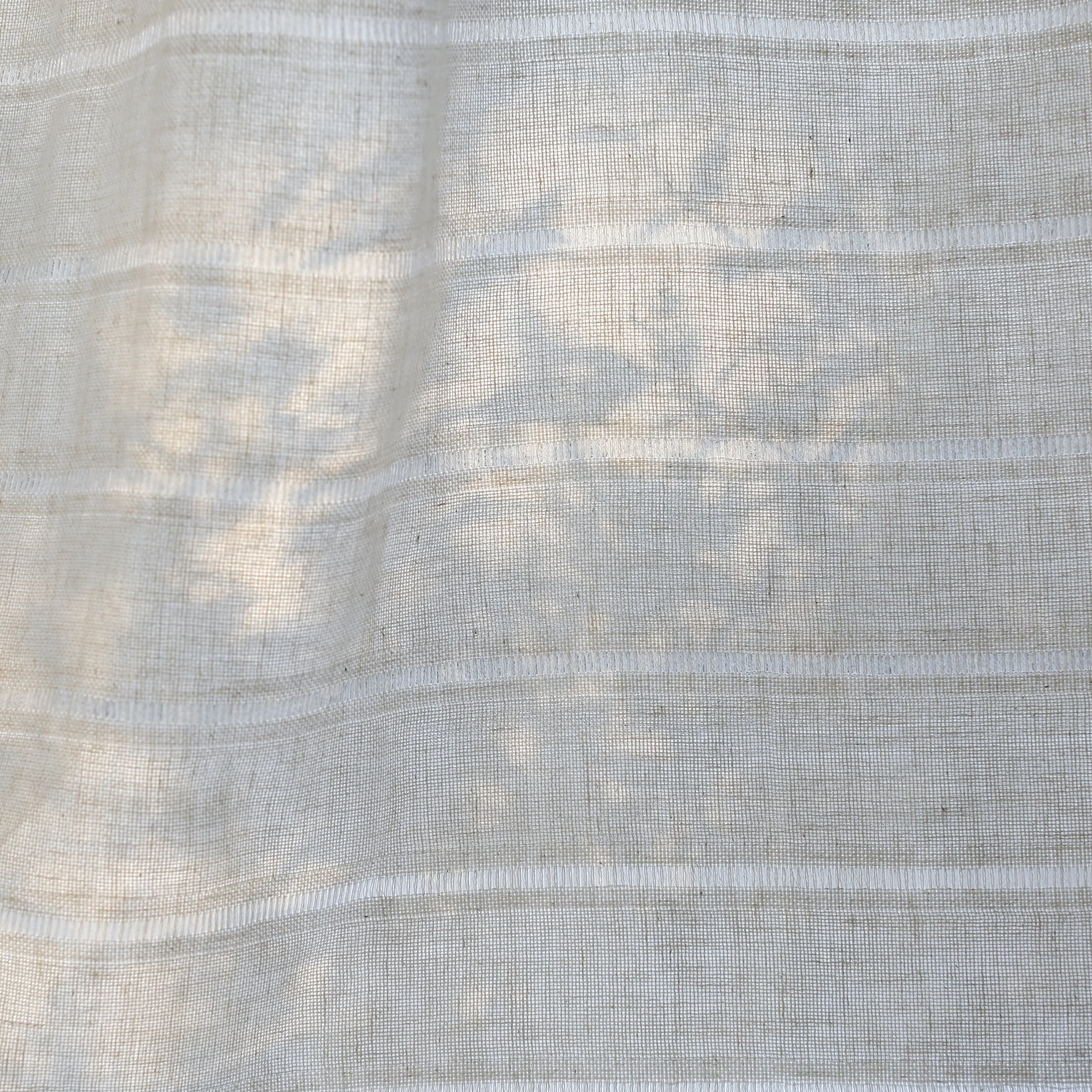
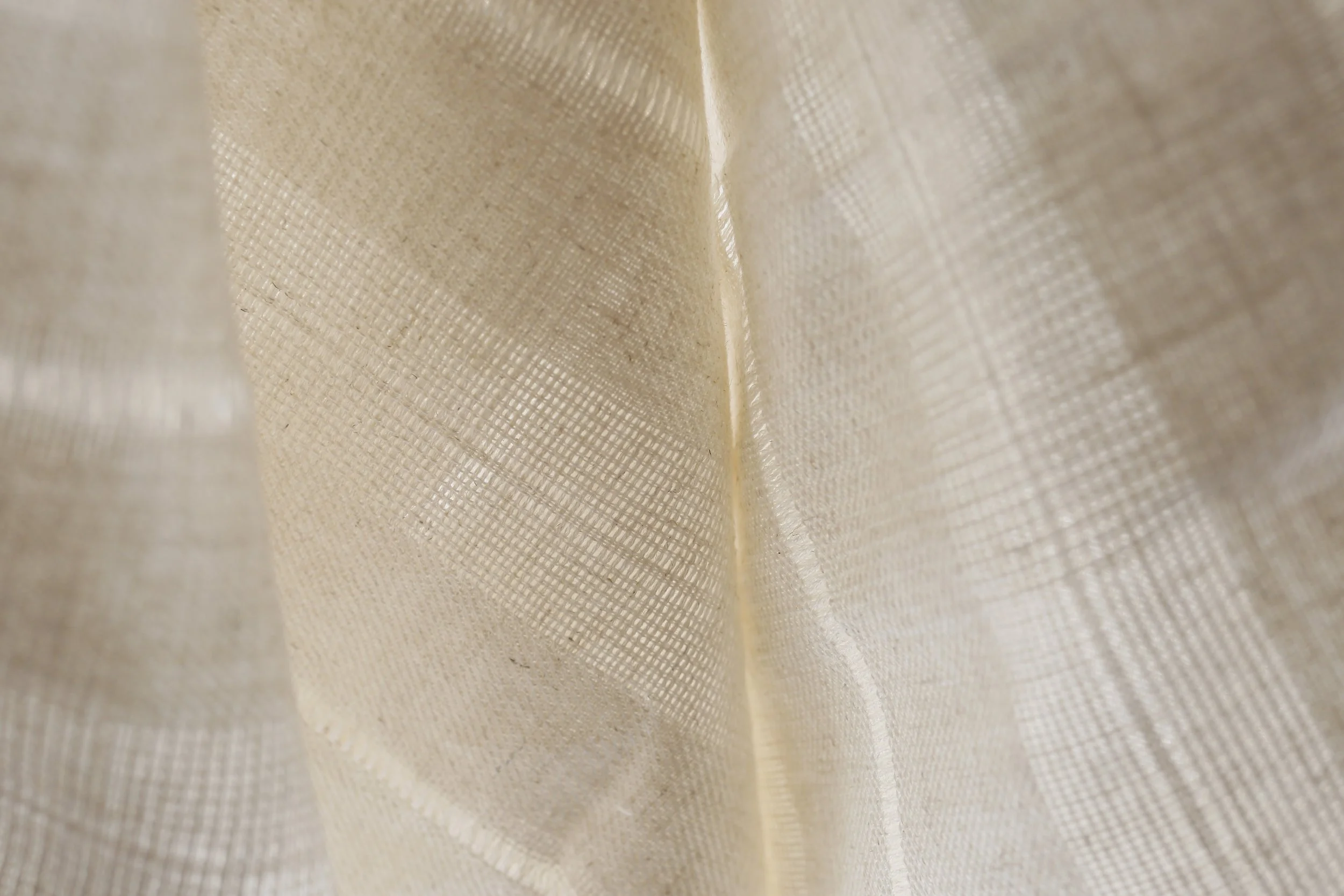
Surface interaction under light
Moving from sample to system
At salt., we focus on projects that can move beyond concept because samples that sit in storage boxes on shelves in offices have limited value.
The next step is always to test materials in real contexts, especially in interiors and architecture, where performance, aesthetics and sustainability matter together.
This becomes increasingly relevant as these sectors look towards lower impact material systems that still retain warmth, tactility and a sense of connection to natural material origins.
This is where collaboration becomes important again, not just in making, but in applying. We need our clients to help us develop this further, their desires really do count.
Across this work, the same idea holds. Materials only become meaningful when they are used, tested and understood within real-life. That shift depends on collaboration between organisations, disciplines and ways of thinking.
Science, manufacturing and design are not separate stages, they are part of the same ecological and industrial conversation.
As textile development moves towards renewable resources, circular systems and more biophilic approaches to material experience, projects like this suggest that sustainability is not only about replacing materials. It is about reshaping the relationships between waste and value, softness and structure, industry and environment and ultimately between people and the materials that surround them.
If you are interesting in finding out more about this project, or ways that salt. can introduce innovative and sustainable fabrics to your design work then do get in touch.
Project partners
University of the Arts London
Helen Paine · Kate Goldsworthy
University of Leeds
Sophie Fields · Mike Ries
Ogam Jacquard Weavers Ltd
Richard Evans
Dr Raquel Prado
WT Johnson & Sons Ltd
The Blinds Company
Graham Lett
Photography
Yesenia Thilault-Picazo · Charlotte Macpherson